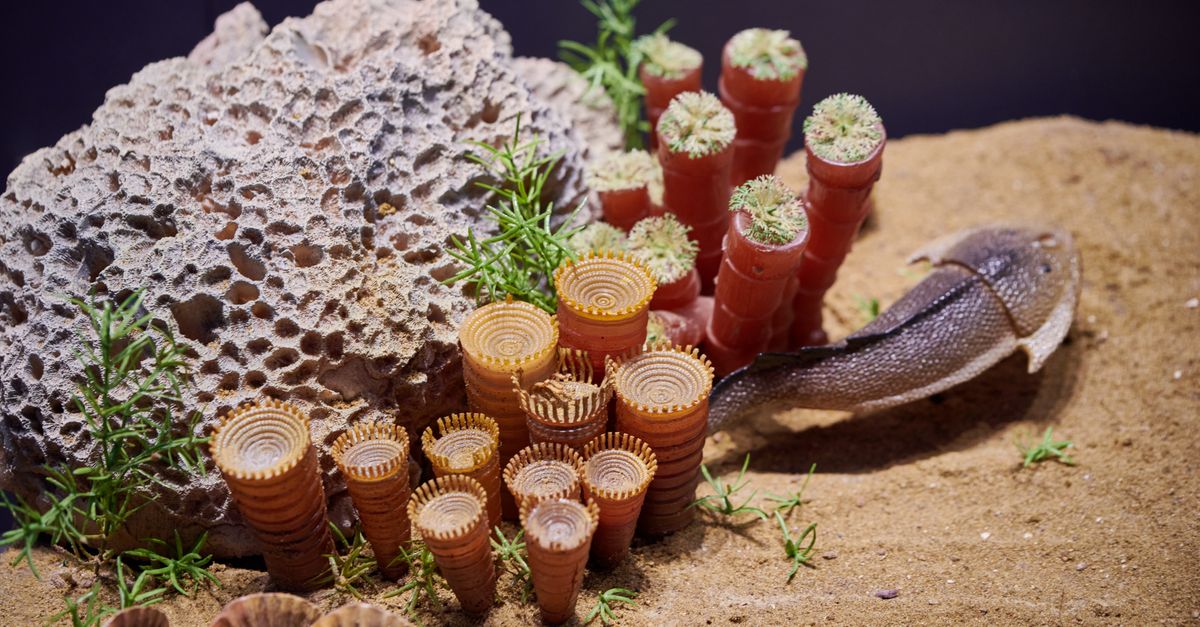
Scientists from the University of Galway have joined an international marine research mission to deploy 23 3D-printed artificial eco-reefs off the Porcupine Bank, aiming to accelerate the restoration of deep-sea coral habitats damaged by bottom trawling.
The deployment took place in waters between 900 and 1,100 metres deep, located roughly 200 kilometres off Ireland's south-west coast, as well as in the Guilvinec Canyon in the Bay of Biscay. The initiative forms part of REDRESS—Restoration of deep-sea habitats to rebuild European Seas—a Horizon Europe project involving Irish, French, and international oceanographic institutions.
Each 3D-printed eco-reef stands approximately 80 centimetres high, weighs around 600 kilograms, and is constructed using low-carbon concrete incorporating volcanic materials. The cylindrical structures feature irregular crevices designed to mimic natural underwater rock formations, providing shelter for marine life and anchor points for slow-growing cold-water corals.
According to Dr Anthony Grehan, a deep-sea ecologist at the University of Galway and co-leader of the expedition, natural recovery of deep-water corals destroyed by commercial fishing can take decades or centuries because cold-water species grow by only a few millimetres each year. He noted that the project is testing whether active human intervention can create starter frameworks to kickstart ecosystem regeneration at depths beyond the reach of human divers.
The reefs were lowered to the seabed using specialized tether cables and acoustic release systems, allowing researchers to log precise coordinates for future monitoring. Scientists confirmed that early observations from earlier test deployments in the Bay of Biscay have yielded encouraging results for deep-sea habitat recovery.
Discussion
Sign in with Google to comment